PORT: Permissions, Orgs, Roles and Teams
Keller Williams, Command
Role: Lead UX Designer
In 2023, a data breach revealed a critical vulnerability in our platform: widespread credential sharing among our Solo (non-Team) user base. Because the platform lacked collaborative tools for Solo agents, they were sharing usernames and passwords to grant access to their assistants.
Command was originally built for individual use. A 2021 effort to support teams had been under-scoped, resulting in a fragmented architecture where users were trapped in split Solo/Team contexts. For years, the UX team tracked these pain points, but the complex migration work was repeatedly deprioritized. The 2023 breach made it so the issue was no longer a UX pain point — it was a security mandate.
Within months, this evolved into "PORT" (Permissions, Orgs, Roles, Teams), a prioritized initiative spanning 10+ product teams. As UX Lead, I was responsible for the strategic migration of 178,000 users to a multi-tenant model that balanced urgent security requirements with complex cross-platform dependencies.
Strategic Trade-offs: Migration vs. Innovation
Our core dilemma was how to provide Solo agents with collaborative access without creating more security risks. We evaluated two paths: building guest functionality into existing Solo accounts (a low-effort, short-term fix) or migrating Solo accounts to the Team architecture (a high-effort, long-term structural solution).
We selected the latter. We positioned the migration not just as a security patch, but as a strategic unlock for revenue-driving initiatives like expansion teams, per-seat licensing, and white-label partnerships. I worked with a "Tiger Team" of engineering leads to prove a multi-tenant architecture could solve the UX debt while securing the platform. Following a successful POC, we negotiated a phased roadmap to deliver the 18-month project.
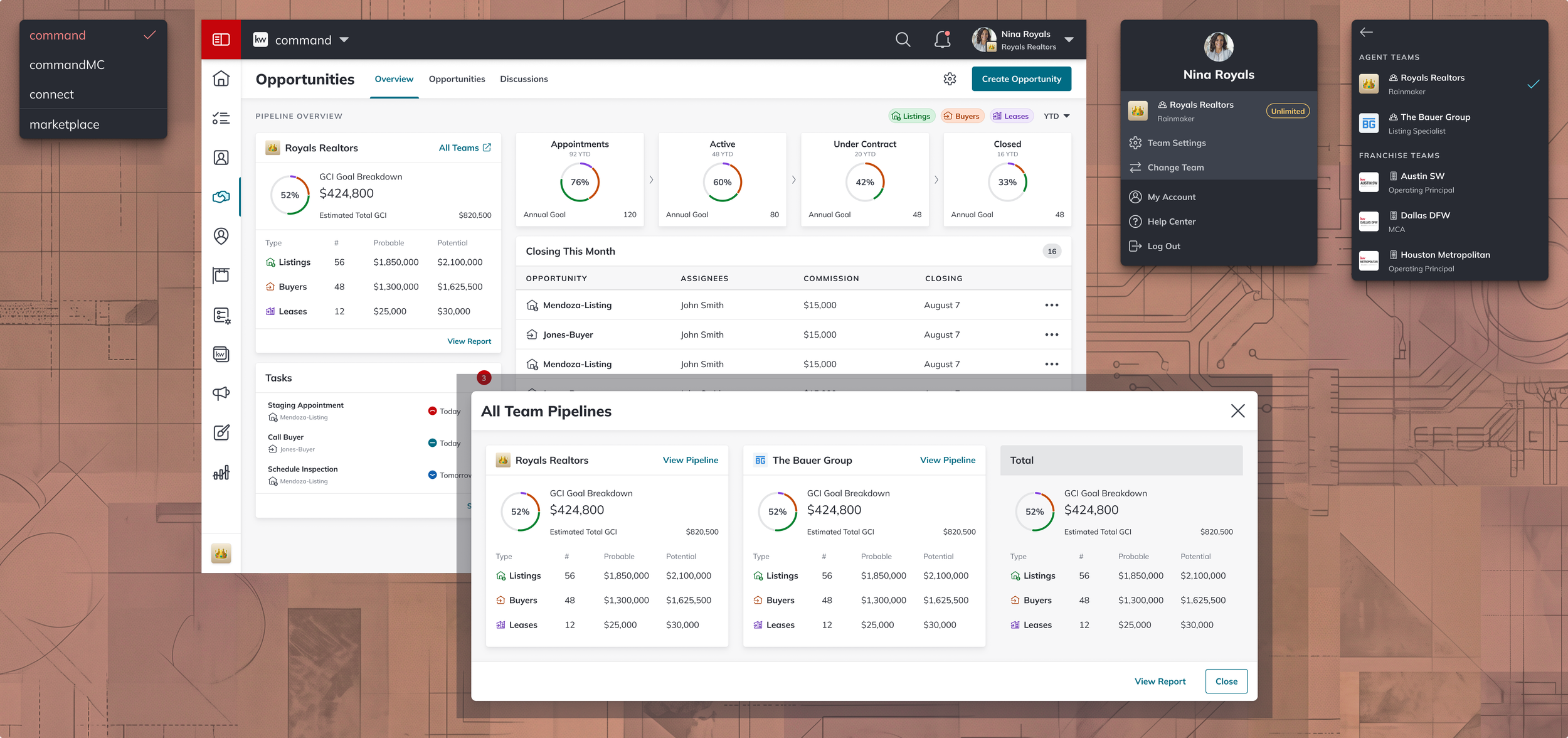
As part of the POC, I created designs showing a future vision of Command that allowed users to see across all of their Teams.Designing the Migration: Triaging Friction
Priority #1 was migrating 178,000 active Solo accounts to the Team experience. The challenge was preventing "feature shock"—forcing a Team-centric UX onto users who didn't actually have teammates.
I audited every flow for severity. Anything a Solo user couldn't answer was flagged as a blocker. Lower-risk items (copy variants, optional fields) were validated with current users and treated as standard CRM expectations.
Adaptive Lead Routing: Rather than forcing Team-level routing logic on Solo agents, I redesigned the flow to read roster counts and user preferences, conditionally surfacing routing steps only when they added value.
Secure Onboarding: The original flow relied on Team Admins setting passwords for guests—a new vector for credential sharing. I designed a flow that empowered guests to own their credentials, facilitating secure, multi-team access for those who supported multiple agent teams.
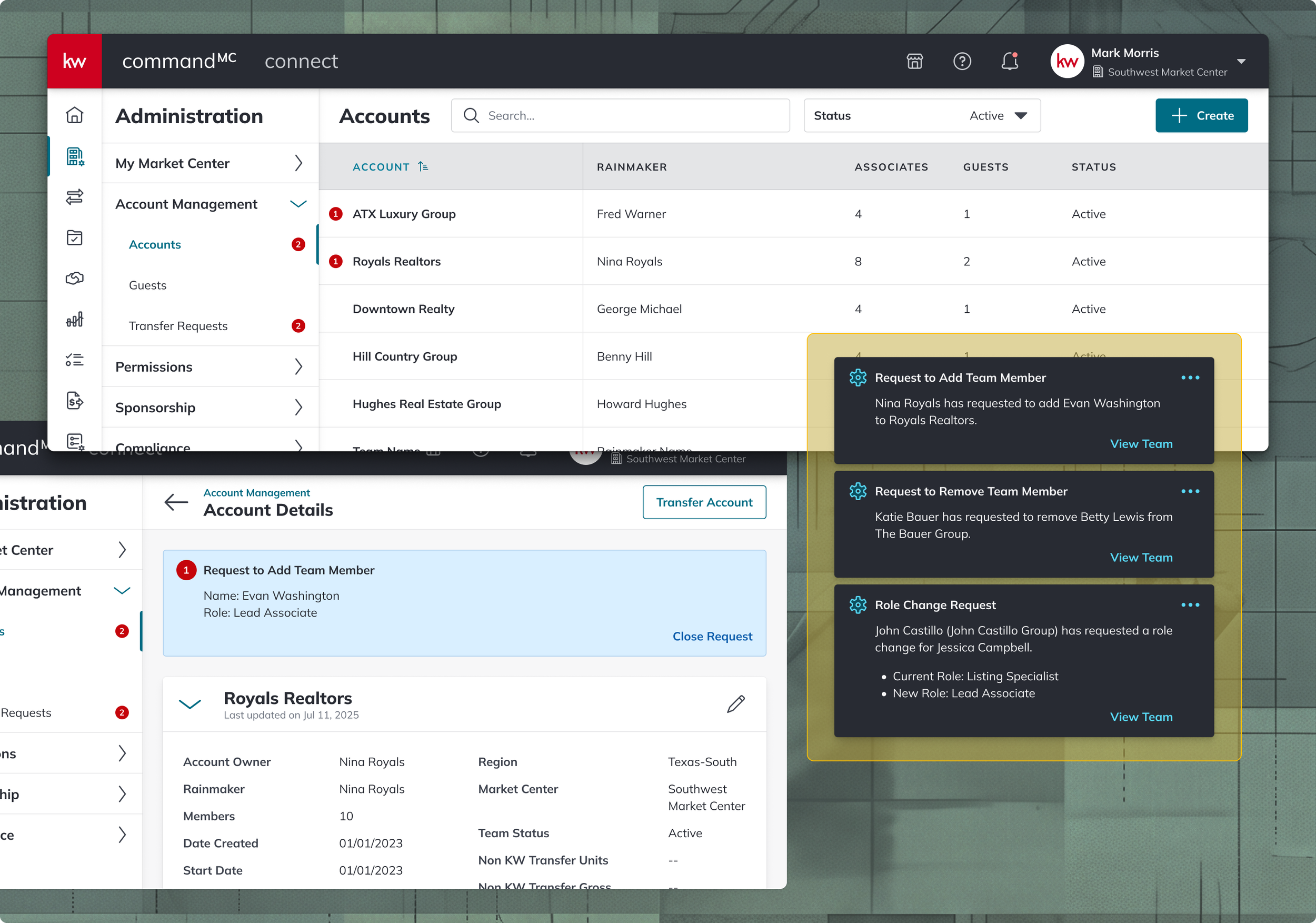
Infrastructure Alerting: I discovered a communication gap between agents and Market Center (MC) staff—neither side received notifications for invitation approvals. I escalated this as a critical UI failure and designed a notification system that integrated toast alerts and a centralized dashboard for MC staff.
Governance: Scaling through Documentation
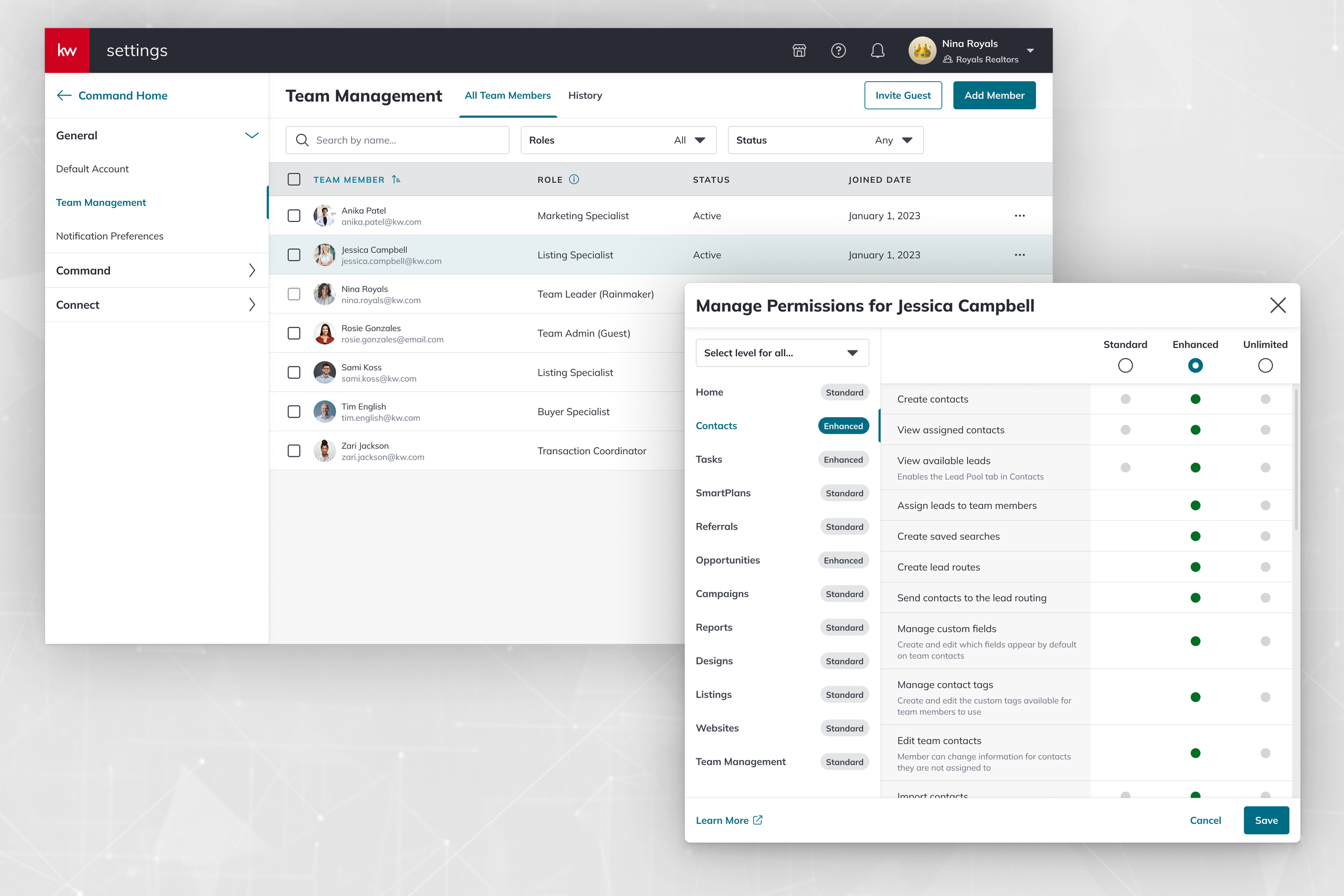
The center of PORT was the Team Management page, a modal-based editor with per-app tabs and a permission grid. The challenge wasn't just the UI; it was ensuring 10+ independent product teams shipped consistent patterns against it.
I shifted my role from "screen designer" to "UX advisor." I embedded with teams during kickoff, published documentation, and maintained a regular design review cadence. Two frameworks were essential to this alignment:
The Disabled-vs-Hidden Framework: I authored a rule set to eliminate inconsistency in how teams handled restricted actions. (e.g., Hide if the user is unauthorized; Show as disabled/explained if the action is state-dependent.)
Permission Copywriting Guidelines: To fix the fragmented language across apps (e.g., "Edit Contacts" vs. "Update contact info"), I created a standard grammar pattern for permission screens, ensuring consistent verb usage across the platform.
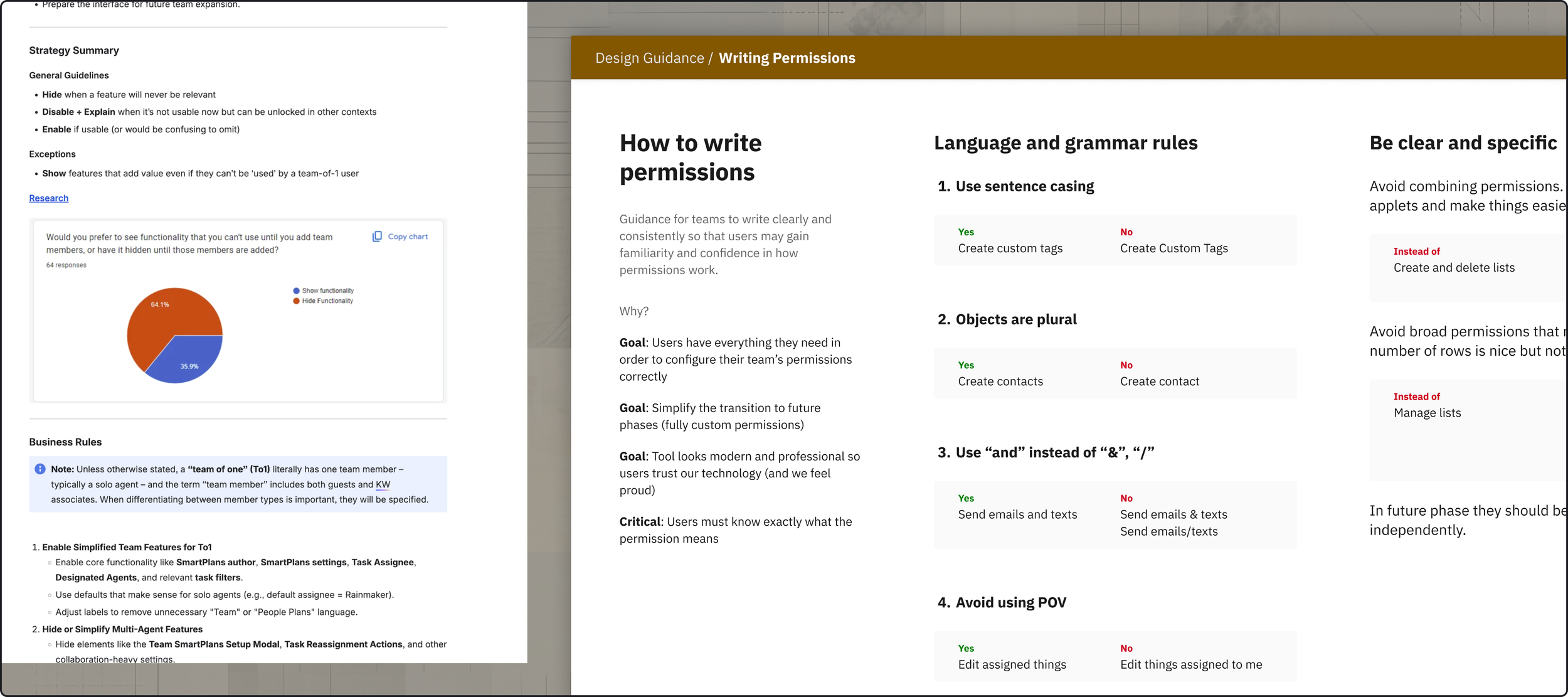
These documents didn't just align the teams—they were eventually ingested into the company’s internal AI tooling, codifying my design governance for future teams.
Lessons in Alignment: CommandMC
Alignment faltered during the CommandMC integration. The CommandMC team, operating with different priorities, introduced "feature groups" to granularize permissions, creating a disconnect between the two platforms.
CommandMC’s sub-groups added more control, but more complexity.Proposed fallback to align with Command’s implementation.Beta testing revealed the mismatch: feature groups added cognitive load without functional benefit, disorienting users who moved between the Command and CommandMC environments. While I advocated for a rollback to platform-wide alignment, the product teams were anchored to their build.
I left the company before the final decision, but the experience highlighted a critical lesson: cross-platform dependencies must be flagged as structural risks at the start of the build, not during Beta testing. In retrospect, I would have escalated the structural inconsistency to executive leadership the moment it appeared, rather than attempting to solve it as a cleanup task.
Outcomes
PORT successfully unified the platform ecosystem:
Every application migrated to the Team model and supported custom permissions
Solo agents gained a secure, legitimate path for assistant collaboration
The architecture removed the long-standing blocker for revenue initiatives and simplified the user journey by eliminating the "Team vs. Solo" context-switching.
Feedback from our user advocate panels confirmed the value: Solo agents appreciated the professional collaborative tools, and Team users finally experienced a unified platform. The project was recognized as a top-tier cross-team initiative, and the governance frameworks I established remain the operational standard for platform design at the company.